
A Look at the Strangest Eyes in Nature

The animal kingdom is full of fascinating adaptations.
Some of the most jaw-dropping examples can be found in eyes. From incredible vision capabilities to strange shapes and colors, these unique eyes help creatures hunt, hide, and survive. Let’s explore a few of nature’s most extraordinary ocular designs.
Mantis Shrimp: Masters of Color Vision
The mantis shrimp doesn’t just see the world in vivid color; it takes it to a whole new level. While humans have three types of color-receptive cones, mantis shrimp have up to sixteen. This allows them to detect a vast range of colors, including ultraviolet light. Their eyes can also move independently and have trinocular vision in each eye, meaning each one can gauge depth on its own. It’s like having a built-in, high-tech camera in each socket.
Goats: The Rectangular Pupils
If you’ve ever looked into a goat’s eyes, you might have noticed their pupils are horizontal and rectangular. This unique shape gives them a wide panoramic field of vision (over 300 degrees), helping them keep watch for predators. It also helps stabilize their view when grazing on uneven terrain, which is crucial for animals that spend a lot of time with their heads down.
Geckos: Super-Sensitive Night Vision
Geckos are nocturnal hunters, and their eyes are built for the dark. Some species have night vision so powerful they can see up to 350 times better than humans in low light. They also have vertical slit pupils that expand dramatically in the dark and contract to a thin line in bright daylight. These pupils contain intricate pinhole-like openings that allow for sharp vision across different lighting conditions.
Four-Eyed Fish: One Pair, Two Purposes
The four-eyed fish, or anableps, doesn’t actually have four eyes — but it sure looks like it. Each of its two eyes is divided into two sections by a horizontal band. The top half is adapted to see above the water, while the bottom half is specialized for underwater vision. This means the fish can watch for predators in the air and prey in the water at the same time.
Chameleons: Independent Operators
Chameleons are famous for their color-changing skin, but their eyes are equally remarkable. They can rotate and focus each eye independently, giving them a full 360-degree view without moving their heads. When it’s time to hunt, both eyes lock in on a target for precise depth perception — a perfect combination of surveillance and accuracy.
Jumping Spiders: Tiny Predators with Big Eyes
Despite their small size, jumping spiders have excellent vision thanks to their large central eyes, which give them sharp focus and good color vision. They have eight eyes in total, positioned to provide nearly complete coverage of their surroundings. This keen eyesight is essential for their hunting style, which involves stalking and leaping onto prey.
Nature’s Many Ways of Seeing
From rectangular pupils to independently moving eyeballs, the diversity of eyes in nature shows just how adaptable vision can be. Each unique design serves a specific purpose, perfectly tuned to the animal’s environment and way of life. We urge our patients to protect their own eyes with regular eye exams so you can enjoy all the wonders the world has to offer.
Your eyes might not be as unusual as a mantis shrimp’s, but they’re just as valuable!
The content on this blog is not intended to be a substitute for professional medical advice, diagnosis, or treatment. Always seek the advice of qualified health providers with questions you may have regarding medical conditions.
Quick Links
All Eye Care Services
Dry Eye Treatment in Santa Monica
Dry eyes rarely have one cause, so we don’t start with a prescription. We start by finding out why your eyes are dry, then build a plan around daily habits and home care, because that is what makes the biggest difference. If you need more, we offer IPL, radiofrequency (RF), punctal plugs, and prescription treatments, with a follow-up plan so you always know what comes next.
Myopia Management for Kids in Santa Monica
If your child’s prescription keeps getting stronger, it’s worth acting early. We start myopia evaluations at age 4. We’ll explain what rising nearsightedness can mean over time and what to expect as school demands grow and puberty arrives. Then we choose an option your child will accept: atropine drops, Stellest lenses, MiSight contact lenses, or orthokeratology (overnight lenses). We check progress every few months and adjust as your child grows.
Specialty Contact Lens Evaluations in Santa Monica
Told that contact lenses won’t work for you? Often there is a way. We evaluate multifocal, scleral, mini-scleral, and hybrid lenses, including lenses for keratoconus and for eyes after surgery. With corneal topography and trial lenses in every style, we find what works for your eyes. We have helped patients who were told elsewhere that contacts weren’t an option.
Find personalized eye care excellence with our comprehensive services. From eye exams to advanced diagnostics, trust us for all your vision needs.
Keep In Touch
For non-urgent questions or to learn more about our services, contact us today!
Quick Links
Contact Info
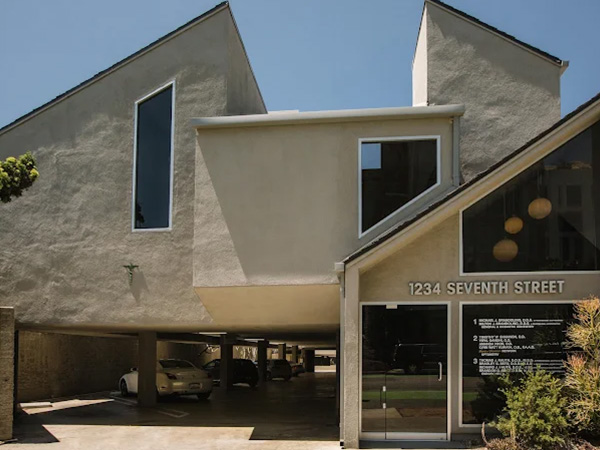
- 1234 7th Street Suite #2
Santa Monica, CA 90401 - Phone: (310) 395-5778
- Fax: (310) 458-9754
Hours of Operation
- Monday 8:00am - 4:30pm*
- Tuesday 8:00am - 4:30pm**
- Wednesday 8:00am - 4:30pm*
- Thursday 8:00am - 4:30pm*
- Friday 8:00am - 4:30pm**
- Saturday Closed
- (Select Saturday appointments are available by request. Call or text (310) 395-5778 to check availability.)
- Sunday Closed
- Please note the following:
* We are closed 12:00 - 1:00 for lunch on Monday, Wednesday, and Thursday.
** We are closed 12:30 - 1:30 for lunch on Tuesday and Friday. - Monday
- Tuesday
- Wednesday
- Thursday
- Friday
- Saturday
- Sunday
- Monday
- Tuesday
- Wednesday
- Thursday
- Friday
- Saturday
- Sunday
© 2026 Golden State Optometry. All rights Reserved -
Accessibility Statement
-
Privacy Policy
-
Sitemap
Managed and Designed by 