
All About Color Blindness
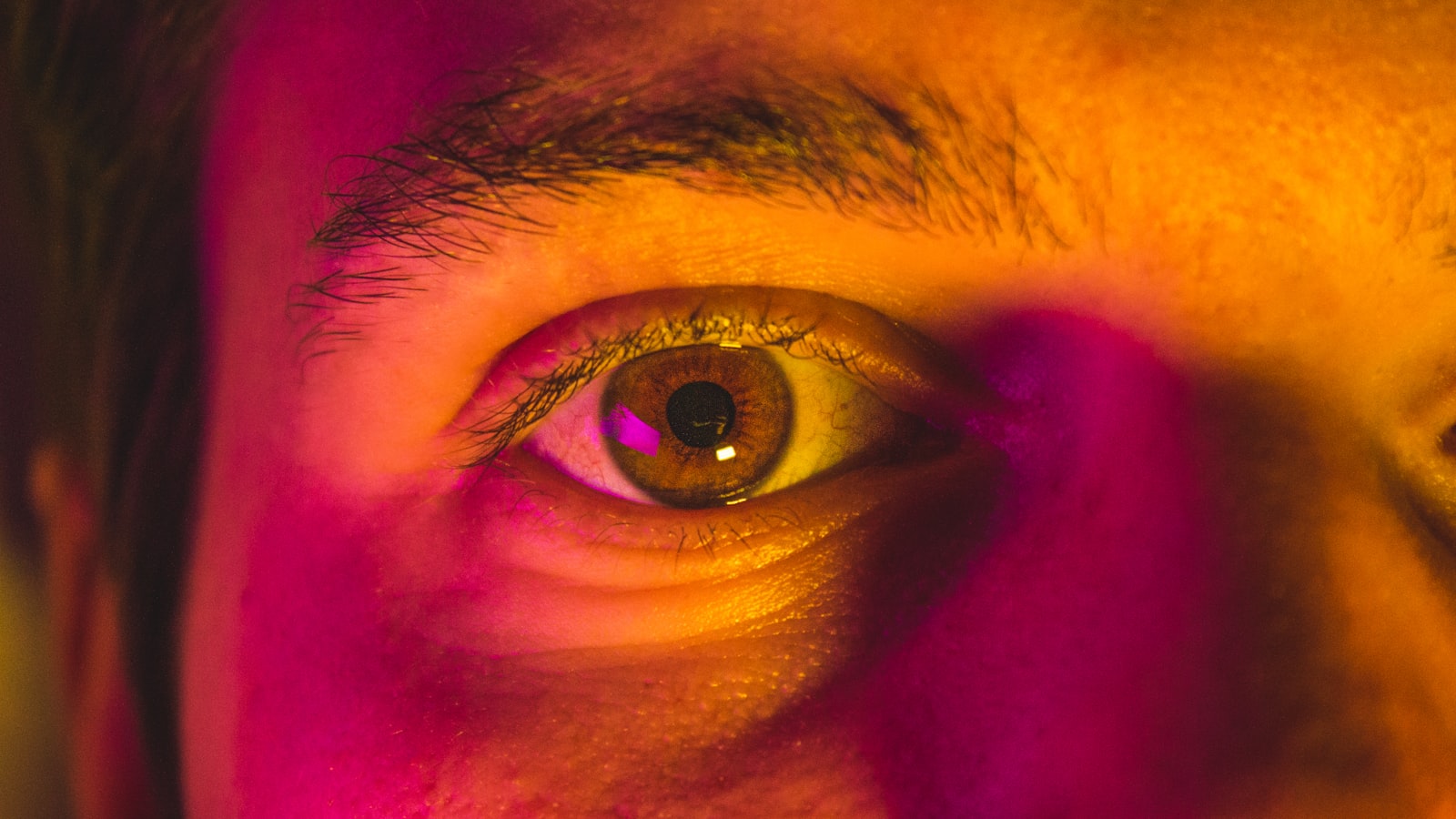
Anyone who doesn’t have color blindness might expect it to work like black-and-white photography.
It’s actually more complex than that. There are different types of color blindness, and whether or not you have it is almost always dictated by your genes.
The Genetics Of Color Blindness
Color blindness is largely determined by a recessive gene on the X chromosome. This means that women need two copies of the gene to actually be colorblind but they can be carriers with no symptoms if they only have one copy, whereas men will be colorblind if their single X chromosome contains the gene. As a result, around eight percent of men are colorblind, compared to less than one percent of women.
How Color Vision Works
There are two types of light-sensitive cells in our retinas: rods and cones. Rods enable us to see in low-light conditions, while cones enable us to see colors. Our color vision is trichromatic, meaning we have cones that are specifically sensitive to long (red), medium (green), and short (blue) wavelengths of light. Color blindness is what happens when one or more of these types of cones don’t work the way they should.
Types Of Color Blindness
The most common type of color blindness is red/green. Because red and green are opposite colors, you’ll be red/green colorblind whether it’s the green cones that aren’t working (deuteranomaly) or the red cones (protanomaly). The result is about the same either way: colors with red or green in them appear duller or yellowish brown.
Much more rare is blue/yellow color blindness (tritanopia), which happens when the blue cones are the ones that don’t work properly. This results in a visual landscape of pinks, teals, and browns.
Even rarer than red/green and blue/yellow color blindness is monochromacy, or complete color blindness. People with monochromatic vision can only see in shades of gray. They tend to be extremely sensitive to light. Because cones are what give us sharp detail in our vision, monochromacy can also mean that vision will be fuzzy overall.
Fun fact: many animals, including dogs, have red/green color blindness. They mostly see in yellows, blues, and grays. The idea of enraging a bull using a red cape is erroneous, because bulls can’t see the color red!
Glasses To Correct Color Blindness?
Within red/green and blue/yellow color blindness, there are still important distinctions in how it happens. You could be dichromatic, meaning your eyes completely lack a type of cone, or you could be an anomalous trichromat, meaning your cones simply overlap too much in what stimulates them.
Anomalous trichromacy is more common, and if the overlap isn’t too severe, the color blindness can be counteracted with special glasses designed to block out the wavelengths of light that trigger both types of cones.
Check out this video to see how these glasses work:
Need Help Navigating Your Color Blindness?
If you’ve been living with a type of color blindness, there are plenty of resources available to you to make life in a trichromatic society easier. Schedule an appointment with your local Vision Source® member optometrist so that they can get you what you need!
Thank you for trusting Vision Source with your vision health!
Find a Vision Source® practice near you using our search tool.
Top image used under CC0 Public Domain license. Image cropped and modified from original.
The content on this blog is not intended to be a substitute for professional medical advice, diagnosis, or treatment. Always seek the advice of qualified health providers with questions you may have regarding medical conditions.
Quick Links
All Eye Care Services
Dry Eye Treatment in Santa Monica
Dry eyes rarely have one cause, so we don’t start with a prescription. We start by finding out why your eyes are dry, then build a plan around daily habits and home care, because that is what makes the biggest difference. If you need more, we offer IPL, radiofrequency (RF), punctal plugs, and prescription treatments, with a follow-up plan so you always know what comes next.
Myopia Management for Kids in Santa Monica
If your child’s prescription keeps getting stronger, it’s worth acting early. We start myopia evaluations at age 4. We’ll explain what rising nearsightedness can mean over time and what to expect as school demands grow and puberty arrives. Then we choose an option your child will accept: atropine drops, Stellest lenses, MiSight contact lenses, or orthokeratology (overnight lenses). We check progress every few months and adjust as your child grows.
Specialty Contact Lens Evaluations in Santa Monica
Told that contact lenses won’t work for you? Often there is a way. We evaluate multifocal, scleral, mini-scleral, and hybrid lenses, including lenses for keratoconus and for eyes after surgery. With corneal topography and trial lenses in every style, we find what works for your eyes. We have helped patients who were told elsewhere that contacts weren’t an option.
Find personalized eye care excellence with our comprehensive services. From eye exams to advanced diagnostics, trust us for all your vision needs.
Keep In Touch
For non-urgent questions or to learn more about our services, contact us today!
Quick Links
Contact Info
- 1234 7th Street Suite #2
Santa Monica, CA 90401 - Phone: (310) 395-5778
- Fax: (310) 458-9754
Hours of Operation
- Monday 8:00am - 4:30pm*
- Tuesday 8:00am - 4:30pm**
- Wednesday 8:00am - 4:30pm*
- Thursday 8:00am - 4:30pm*
- Friday 8:00am - 4:30pm**
- Saturday Closed
- (Select Saturday appointments are available by request. Call or text (310) 395-5778 to check availability.)
- Sunday Closed
- Please note the following:
* We are closed 12:00 - 1:00 for lunch on Monday, Wednesday, and Thursday.
** We are closed 12:30 - 1:30 for lunch on Tuesday and Friday. - Monday
- Tuesday
- Wednesday
- Thursday
- Friday
- Saturday
- Sunday
- Monday
- Tuesday
- Wednesday
- Thursday
- Friday
- Saturday
- Sunday
© 2026 Golden State Optometry. All rights Reserved -
Accessibility Statement
-
Privacy Policy
-
Sitemap
Managed and Designed by 