
Athletes and the Visual Skills They Use

When we think of the traits of an athlete, we usually think of speed and strength first.
A close third should be their visual skills. Athletes need to be able to process and react to visual information very quickly in order to play their sports well. The cool thing is that some of these visual skills can be honed and improved with practice.
Which Visual Skills Do Athletes Use?
Here are some of the most essential visual skills to an athlete’s performance:
- Color vision. This one might seem silly, but there’s no denying that it’s easier to play when you can distinguish between the jersey colors of your team and the opposing team!
- Depth perception. Judging the relative distances between objects and players on the field is incredibly important.
- Dynamic visual acuity. Athletes need to be able to see fast-moving objects clearly.
- Eye tracking. Merely seeing fast-moving objects isn’t as useful without the ability to follow them with your eyes alone instead of turning your head or body, possibly compromising your balance.
- Eye-hand-body coordination. An athlete needs to be able to continuously adjust the position of their body, hands, and feet based on what they see.
- Peripheral vision. Seeing and reacting to what’s happening on the edge of your vision makes a huge difference in performance.
- Visual concentration. Being easily distracted by things that don’t matter to the game can make it much harder to play!
- Visual reaction time. When an athlete can process and react to visual information quickly, they can quickly move into position.
- Visualization. Athletes need to be able to picture scenarios that could happen next so that they can prepare themselves for upcoming obstacles or opportunities in the game.
- Visual memory. So much is happening in an athlete’s field of vision (such as where they last saw the other players), and they have to keep it all in their head while playing.
Train Your Visual Skills (No Gym Membership Required)
All you need to begin training your visual skills, such as depth perception, is a pen. Simply hold it at arm’s length and repeatedly put the cap on it. You can also hold a small pebble at arm’s length and try dropping it through a drinking straw. You can train your visual awareness by watching TV or using a computer with your head turned to the side. How about improving the flexibility of your eyes? Just switch rapidly between focusing on something close and something far away. You can practice dynamic visual acuity by cutting out different-sized letters from a magazine and taping them to a turntable, then trying to identify the letters while the turntable rotates at different speeds.
We Want to Help You Keep Your Eye on the Ball!
Staying in shape for sports isn’t something we usually associate with keeping our eyes sharp and healthy, but it shouldn’t be overlooked! Get in touch with us or schedule an appointment to learn more about how to improve your visual skills or to tell us about any changes or negative symptoms you may be experiencing with your eyesight.
Nothing is better than being your partner in vision health!
Top image used under CC0 Public Domain license. Image cropped and modified from original.
The content on this blog is not intended to be a substitute for professional medical advice, diagnosis, or treatment. Always seek the advice of qualified health providers with questions you may have regarding medical conditions.
Quick Links
All Eye Care Services
Dry Eye Treatment in Santa Monica
Dry eyes rarely have one cause, so we don’t start with a prescription. We start by finding out why your eyes are dry, then build a plan around daily habits and home care, because that is what makes the biggest difference. If you need more, we offer IPL, radiofrequency (RF), punctal plugs, and prescription treatments, with a follow-up plan so you always know what comes next.
Myopia Management for Kids in Santa Monica
If your child’s prescription keeps getting stronger, it’s worth acting early. We start myopia evaluations at age 4. We’ll explain what rising nearsightedness can mean over time and what to expect as school demands grow and puberty arrives. Then we choose an option your child will accept: atropine drops, Stellest lenses, MiSight contact lenses, or orthokeratology (overnight lenses). We check progress every few months and adjust as your child grows.
Specialty Contact Lens Evaluations in Santa Monica
Told that contact lenses won’t work for you? Often there is a way. We evaluate multifocal, scleral, mini-scleral, and hybrid lenses, including lenses for keratoconus and for eyes after surgery. With corneal topography and trial lenses in every style, we find what works for your eyes. We have helped patients who were told elsewhere that contacts weren’t an option.
Find personalized eye care excellence with our comprehensive services. From eye exams to advanced diagnostics, trust us for all your vision needs.
Keep In Touch
For non-urgent questions or to learn more about our services, contact us today!
Quick Links
Contact Info
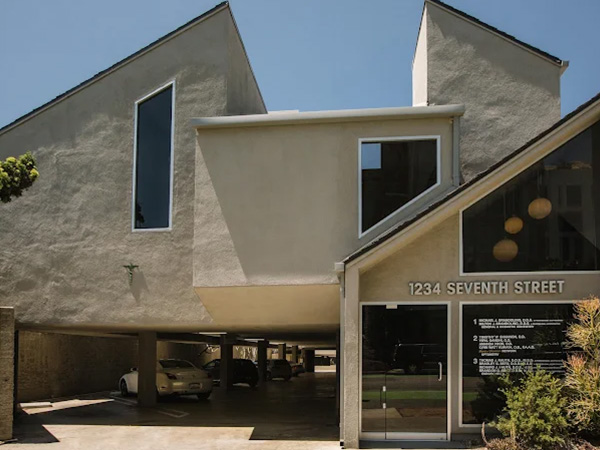
- 1234 7th Street Suite #2
Santa Monica, CA 90401 - Phone: (310) 395-5778
- Fax: (310) 458-9754
Hours of Operation
- Monday 8:00am - 4:30pm*
- Tuesday 8:00am - 4:30pm**
- Wednesday 8:00am - 4:30pm*
- Thursday 8:00am - 4:30pm*
- Friday 8:00am - 4:30pm**
- Saturday Closed
- (Select Saturday appointments are available by request. Call or text (310) 395-5778 to check availability.)
- Sunday Closed
- Please note the following:
* We are closed 12:00 - 1:00 for lunch on Monday, Wednesday, and Thursday.
** We are closed 12:30 - 1:30 for lunch on Tuesday and Friday. - Monday
- Tuesday
- Wednesday
- Thursday
- Friday
- Saturday
- Sunday
- Monday
- Tuesday
- Wednesday
- Thursday
- Friday
- Saturday
- Sunday
© 2026 Golden State Optometry. All rights Reserved -
Accessibility Statement
-
Privacy Policy
-
Sitemap
Managed and Designed by 