
Your Child's Glasses Keep Getting Stronger? Here's What Actually Slows It Down
Your Child's Glasses Keep Getting Stronger? Here's What Actually Slows It Down
It's Not Just Needing New Glasses Again
You've been in this chair before. Your kid squints at the eye chart, you brace for it, and sure enough, the prescription is stronger than it was six months ago. It's tempting to treat this like a routine update, same as buying a size-up in sneakers. It isn't.
A stronger prescription every few months is usually a sign of progressive myopia, meaning the eye itself is still elongating and the nearsightedness is likely to keep climbing through the teenage years. Before we jump to "why is this happening," it's worth saying there's rarely one clean answer. Family history matters (if you or your partner are nearsighted, your odds go up). So does how much close-up work your child's eyes do every day, how much time they actually spend outside, and sometimes just the pace of a growth spurt. Most kids in this chair have some mix of all of the above, not a single cause.
Start With What You Actually Control
Before we talk about any kind of treatment, I want to be direct about the stuff that's on you, not me. It won't undo a prescription that's already changed, but it's real and it matters for what happens next.
Time outdoors is the biggest lever you have. The research keeps landing in the same place, somewhere around two hours a day outside is associated with meaningfully slower progression, and nobody is fully sure why (daylight exposure, less near work, probably both). Screen time is the other half of it, and the numbers are blunter than most parents expect. A recent research review found kids using smartphones more than four hours a day were progressing nearsightedness by roughly two-thirds of a diopter a year, and each additional hour of daily screen time was tied to about a 21% higher chance of developing myopia at all. That's not a scare stat, that's just what the data says.
So: outdoor time up, recreational screen time down, and the 20-20-20 rule for anything close-up (every 20 minutes, 20 seconds, 20 feet away) actually enforced rather than suggested once and forgotten. None of this absolves the rest of us from doing the work either.
When We Talk About Myopia Control
If we've made those changes and the prescription is still climbing, or if the progression is fast enough that waiting isn't a great plan, that's when we're not just updating glasses anymore, we're talking about myopia control. It's a specific category of treatment aimed at slowing the eye's elongation, not just correcting what's already there.
There's actual news in this space worth knowing about. The FDA cleared a new lens called Stellest for kids ages 6 to 12 this past year, built with a ring pattern of tiny lenslets that refocus light at the edges of the retina (the mechanism isn't fully settled scientifically, but the clinical data is solid). Company data reviewed by the FDA showed about a 70% reduction in progression over two years in trials conducted abroad, with U.S.-based studies still underway to confirm those numbers hold here. We also have MiSight contact lenses, which we evaluate kids for starting around age 8 if they're mature enough to handle daily lens care, low-dose atropine eye drops, and orthokeratology (overnight corrective lenses) for specific situations like a kid who swims or plays contact sports.
What This Actually Looks Like for Your Kid
In practice, most families start with whichever option fits their kid's actual life, not whichever sounds most advanced. A younger child or one who isn't ready to handle contact lens care does well starting with Stellest glasses. An older, more responsible kid who wants to ditch glasses for sports gets evaluated for MiSight or ortho-K. Atropine drops are often a good add-on when progression is fast regardless of which lens option we pick.
I want to be honest about what these do and don't promise. They slow progression, they don't reverse it, and they're not a guarantee your child's prescription never moves again. Some kids still progress despite doing everything right, and if that happens to you, it's not a sign you or your kid failed at something.
What to Expect, and When We Check Back In
Once your child is on a myopia control plan, we don't wait a full year to see how it's going. We typically recheck at six months, since that gives us enough time to actually see a trend in either the prescription or the eye's length, rather than guessing. If progression is still too fast at that point, we adjust, sometimes that means adding atropine to a lens option, sometimes it means switching which lens they're in.
If your kid's prescription jumped again at their last exam, don't wait for the next annual visit to start this conversation. Bring it up at the front desk when you book, and we'll set aside time to actually talk through which option makes sense, not just update the glasses and send you on your way.
Concerned about your child’s vision? Schedule a myopia evaluation at Golden State Optometry: call (310) 395-5778 or book online.
Quick Links
All Eye Care Services
Dry Eye Treatment in Santa Monica
Dry eyes rarely have one cause, so we don’t start with a prescription. We start by finding out why your eyes are dry, then build a plan around daily habits and home care, because that is what makes the biggest difference. If you need more, we offer IPL, radiofrequency (RF), punctal plugs, and prescription treatments, with a follow-up plan so you always know what comes next.
Myopia Management for Kids in Santa Monica
If your child’s prescription keeps getting stronger, it’s worth acting early. We start myopia evaluations at age 4. We’ll explain what rising nearsightedness can mean over time and what to expect as school demands grow and puberty arrives. Then we choose an option your child will accept: atropine drops, Stellest lenses, MiSight contact lenses, or orthokeratology (overnight lenses). We check progress every few months and adjust as your child grows.
Specialty Contact Lens Evaluations in Santa Monica
Told that contact lenses won’t work for you? Often there is a way. We evaluate multifocal, scleral, mini-scleral, and hybrid lenses, including lenses for keratoconus and for eyes after surgery. With corneal topography and trial lenses in every style, we find what works for your eyes. We have helped patients who were told elsewhere that contacts weren’t an option.
Find personalized eye care excellence with our comprehensive services. From eye exams to advanced diagnostics, trust us for all your vision needs.
Keep In Touch
For non-urgent questions or to learn more about our services, contact us today!
Quick Links
Contact Info
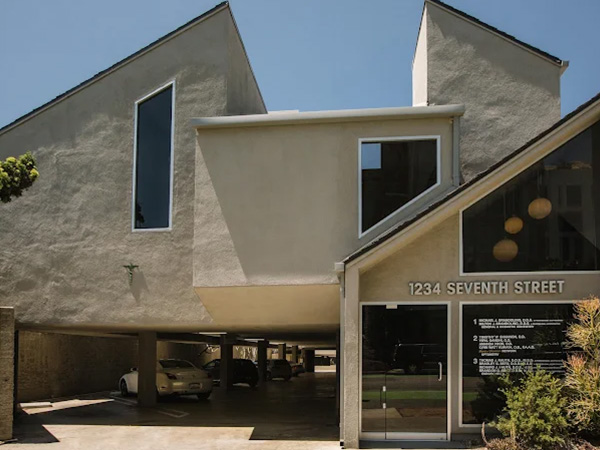
- 1234 7th Street Suite #2
Santa Monica, CA 90401 - Phone: (310) 395-5778
- Fax: (310) 458-9754
Hours of Operation
- Monday 8:00am - 4:30pm*
- Tuesday 8:00am - 4:30pm**
- Wednesday 8:00am - 4:30pm*
- Thursday 8:00am - 4:30pm*
- Friday 8:00am - 4:30pm**
- Saturday Closed
- (Select Saturday appointments are available by request. Call or text (310) 395-5778 to check availability.)
- Sunday Closed
- Please note the following:
* We are closed 12:00 - 1:00 for lunch on Monday, Wednesday, and Thursday.
** We are closed 12:30 - 1:30 for lunch on Tuesday and Friday. - Monday
- Tuesday
- Wednesday
- Thursday
- Friday
- Saturday
- Sunday
- Monday
- Tuesday
- Wednesday
- Thursday
- Friday
- Saturday
- Sunday
© 2026 Golden State Optometry. All rights Reserved -
Accessibility Statement
-
Privacy Policy
-
Sitemap
Managed and Designed by 