What You Eat Can Help Your Eyes

Do you know why people say carrots will give you good night vision?
It’s actually a leftover piece of World War II British misinformation to trick the Germans. The British had just developed radar and didn’t want the Germans finding out how they were locating their planes at night, so they spread it as far and wide as they could that it was because their pilots were eating so many carrots. They were so successful that people are still repeating that today! But even though it’s not true that carrots will give you super eyesight, certain foods really are good for our eyes.
Can Carrots Really Do Our Eyes Any Good?
Yes, carrots are good for us and for our eyes. Many yellow and orange vegetables, as well as leafy greens, are great sources of vitamin A. The color in these veggies comes from beta-carotene, which our intestines use to produce vitamin A. Our eyes then use vitamin A to turn light into brainwaves and make our corneas (the clear layer on the front of the eye) stronger. As many as half a million children lose their eyesight a year, due in part to vitamin A deficiency.
Oranges and Sweet Potatoes
Vitamins C and E are great antioxidants for our overall health but also our eye health. Vitamin C lowers the risk of developing cataracts and might help slow the progression of age-related macular degeneration (AMD). A great source of vitamin C is citrus fruit (oranges, lemons, and grapefruits). We also need vitamin E to protect our eyes from molecules that disrupt healthy tissue (called “free radicals”). A great way to get plenty of vitamin E is to eat sweet potatoes.
Leafy Greens and Eggs
Studies indicate that a diet rich in lutein and zeaxanthin can result in a lower risk of chronic eye diseases, including AMD and cataracts. The best way to get these less well-known nutrients is by eating eggs and leafy greens.
Fish and Oysters
You’ve probably heard that omega-3 fatty acids are important, and research does show that they help with a healthy immune system and good brain function. They also help with visual development and good retinal function. The best source of these nutrients is fish.
Oysters, meanwhile, are a great source of zinc. We need zinc to transport vitamin A from our livers to our retinas. Without it, we can’t get much use out of vitamin A. Nuts, beans, and meat also contain zinc (if not as much) for anyone who doesn’t like oysters.
There’s More to Being Proactive About Eye Health Than Nutrition
Eating the right amounts of all the right nutrients for our eyes is great, but it’s not a get-out-of-eye-exams-free pass. It’s good to remove malnutrition as a factor, but eye problems can occur for a wide range of other reasons, so it’s wise to keep up with regular eye exams. Many vision-threatening diseases are easiest to fight when caught early — earlier than symptoms may be obvious in daily life!
We love helping our patients maintain their healthy eyesight!
Top image used under CC0 Public Domain license. Image cropped and modified from original.
The content on this blog is not intended to be a substitute for professional medical advice, diagnosis, or treatment. Always seek the advice of qualified health providers with questions you may have regarding medical conditions.
Quick Links
All Eye Care Services
Dry Eye Treatment in Santa Monica
Dry eyes rarely have one cause, so we don’t start with a prescription. We start by finding out why your eyes are dry, then build a plan around daily habits and home care, because that is what makes the biggest difference. If you need more, we offer IPL, radiofrequency (RF), punctal plugs, and prescription treatments, with a follow-up plan so you always know what comes next.
Myopia Management for Kids in Santa Monica
If your child’s prescription keeps getting stronger, it’s worth acting early. We start myopia evaluations at age 4. We’ll explain what rising nearsightedness can mean over time and what to expect as school demands grow and puberty arrives. Then we choose an option your child will accept: atropine drops, Stellest lenses, MiSight contact lenses, or orthokeratology (overnight lenses). We check progress every few months and adjust as your child grows.
Specialty Contact Lens Evaluations in Santa Monica
Told that contact lenses won’t work for you? Often there is a way. We evaluate multifocal, scleral, mini-scleral, and hybrid lenses, including lenses for keratoconus and for eyes after surgery. With corneal topography and trial lenses in every style, we find what works for your eyes. We have helped patients who were told elsewhere that contacts weren’t an option.
Find personalized eye care excellence with our comprehensive services. From eye exams to advanced diagnostics, trust us for all your vision needs.
Keep In Touch
For non-urgent questions or to learn more about our services, contact us today!
Quick Links
Contact Info
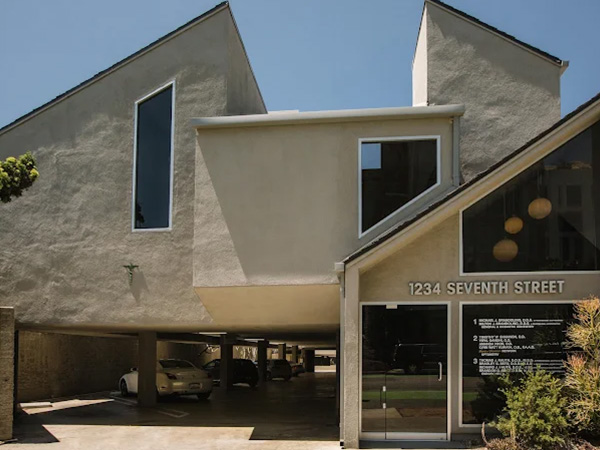
- 1234 7th Street Suite #2
Santa Monica, CA 90401 - Phone: (310) 395-5778
- Fax: (310) 458-9754
Hours of Operation
- Monday 8:00am - 4:30pm*
- Tuesday 8:00am - 4:30pm**
- Wednesday 8:00am - 4:30pm*
- Thursday 8:00am - 4:30pm*
- Friday 8:00am - 4:30pm**
- Saturday Closed
- (Select Saturday appointments are available by request. Call or text (310) 395-5778 to check availability.)
- Sunday Closed
- Please note the following:
* We are closed 12:00 - 1:00 for lunch on Monday, Wednesday, and Thursday.
** We are closed 12:30 - 1:30 for lunch on Tuesday and Friday. - Monday
- Tuesday
- Wednesday
- Thursday
- Friday
- Saturday
- Sunday
- Monday
- Tuesday
- Wednesday
- Thursday
- Friday
- Saturday
- Sunday
© 2026 Golden State Optometry. All rights Reserved -
Accessibility Statement
-
Privacy Policy
-
Sitemap
Managed and Designed by 